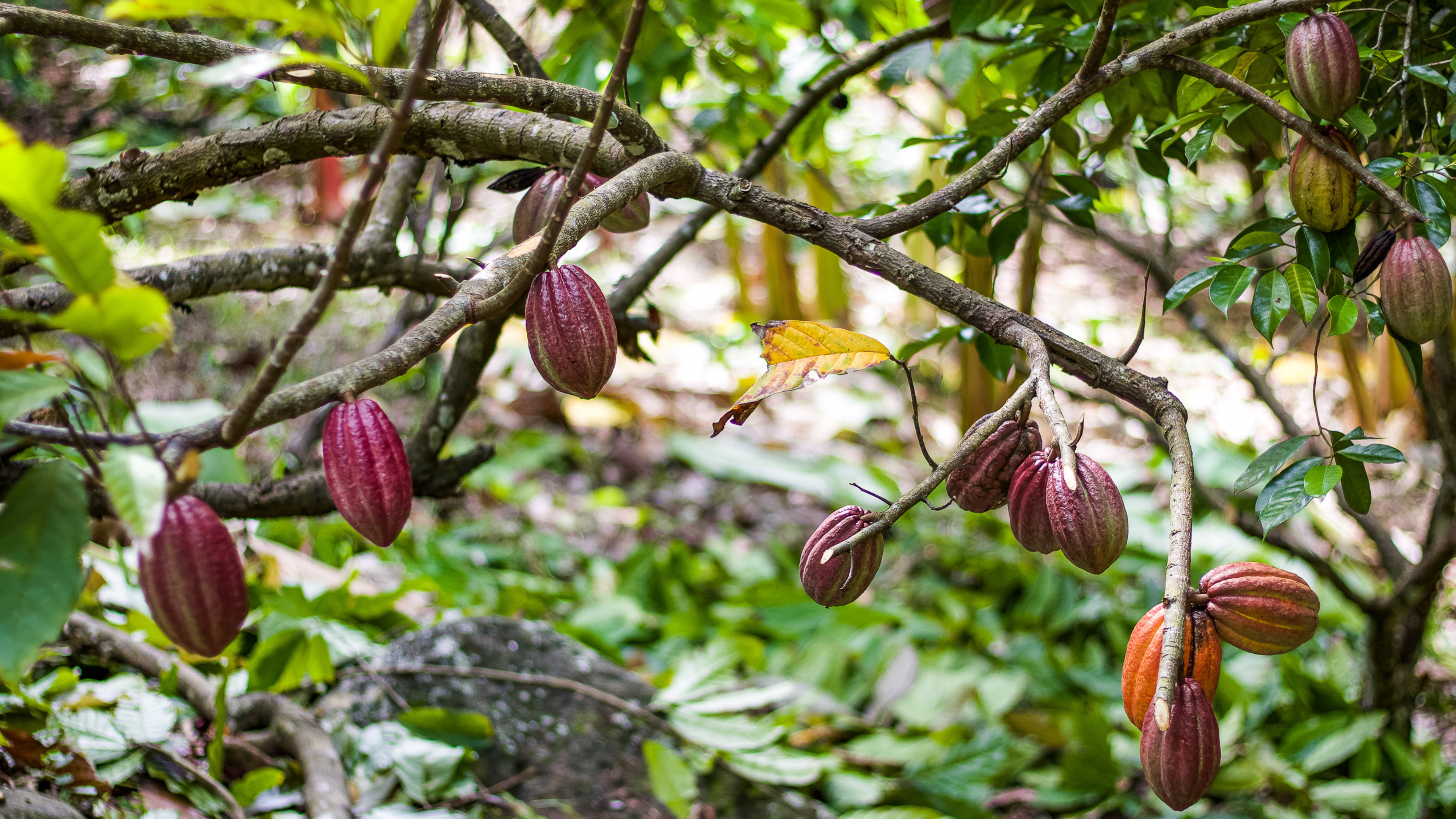
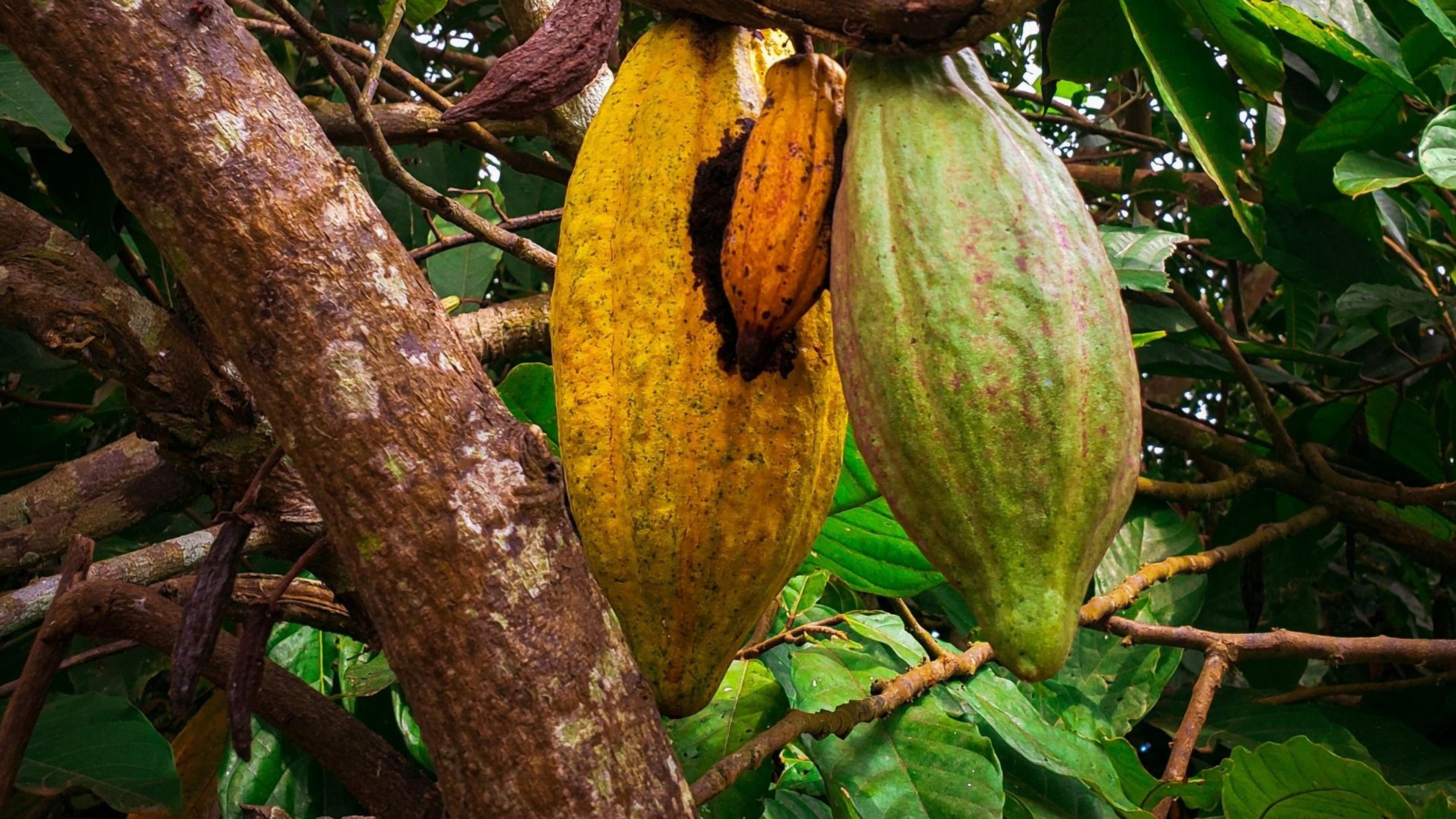
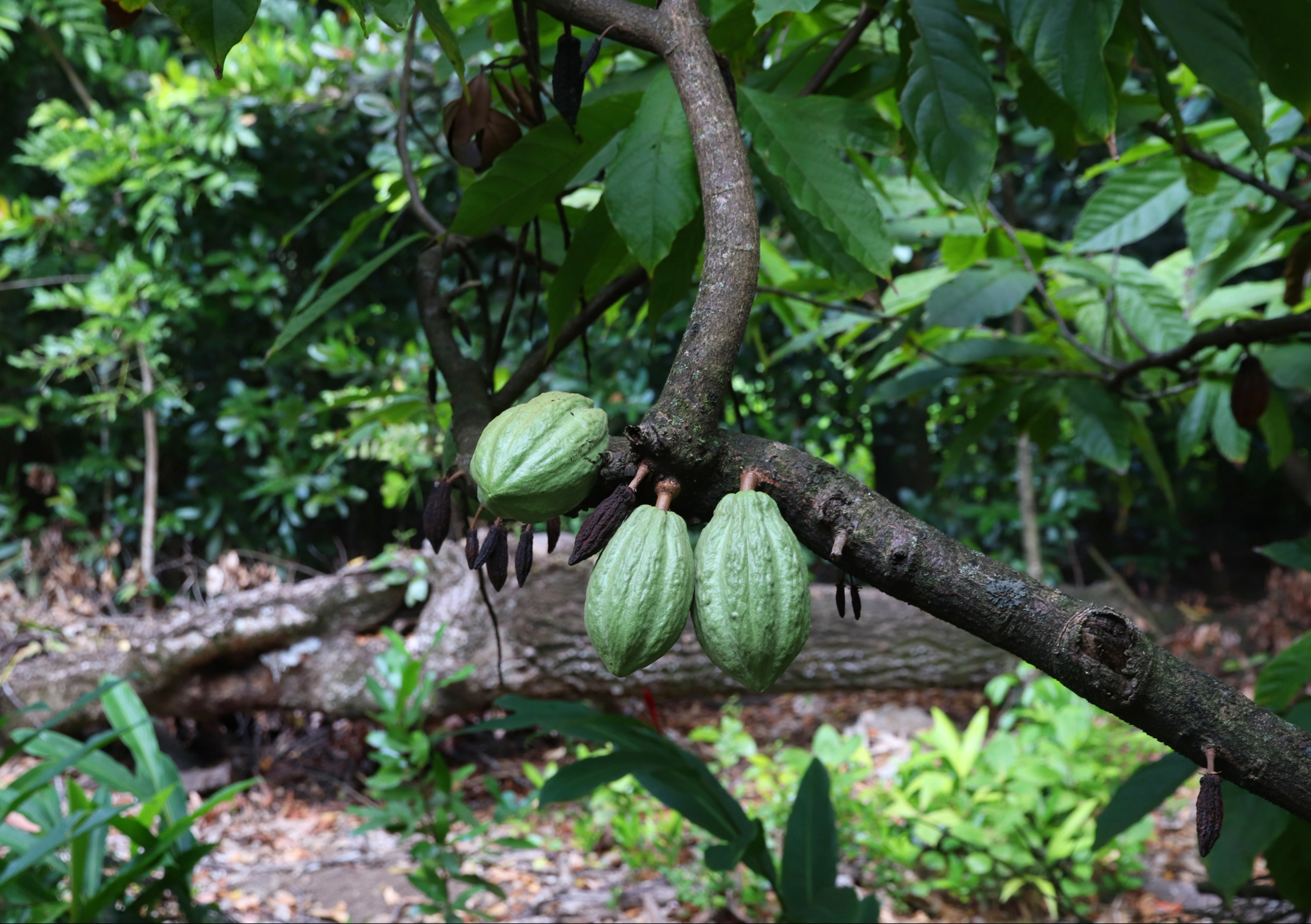
Halloween is over, and chocolate carried most of the price pressure. Americans were expected to spend $4.1 billion on Halloween candy this year, and retail chocolate prices ran 11-12% above last year against roughly 5% for hard candy and gummies [1][2]. Those prices reflect cocoa bought months ago. New York cocoa futures now trade at less than half their December 2024 record, but manufacturers buy forward, so shelf prices trail the futures market by 6 to 18 months [3][4]. This year's chocolate carried the cost of the 2024 shock, while the cocoa for next year's bags is being shaped by weather in Ecuador, Côte d'Ivoire and Ghana right now.
The 2026/27 season brings an unusual risk. NOAA's Climate Prediction Center gives an 83% chance that this El Niño becomes the strongest since 1950 [5]. El Niño tends to make coastal Ecuador much wetter and West Africa's December-February dry season drier, and this season it is doing both at once. Between them, Côte d'Ivoire, Ghana and Ecuador grow around 60% of the world's cocoa [6].
In Ecuador, the rain has arrived in what should be the dry season. Treefera Market Intelligence recorded 411 mm across Ecuador's cocoa areas in the four weeks to 20 October, against a 54 mm average, the wettest such period since 1998, and rivers in the main cocoa provinces were still over their banks at the end of the month [7][8]. Too much water costs a harvest through pod rot and lost flowering. If roots sit in waterlogged soil for around five weeks, trees can die, and a replanted tree takes years to bear fruit [4]. After the 1997-98 El Niño, Ecuador's harvested cocoa area fell 12% and never recovered [9]. The real test comes from January to March, when the El Niño rains normally peak on soils that are already saturated [4].
West Africa faces the opposite problem. Seasonal forecasts put December-February rainfall 30-60% below normal across Côte d'Ivoire and Ghana, with a severe Harmattan, the dry wind off the Sahara, expected on top [4]. That is the window when the mid-crop flowers and sets pods. Dry weather alone does not settle the crop, and 2015-16 was drier still with little fall in output, but trade forecasts already imply a combined loss of about 16% for the two countries [4]. Either loss on its own could probably be absorbed by a market that most forecasts showed in small surplus in October. Together, they could turn it into a deficit [4]. The damage will be slow to show in official numbers. Rain slows field surveys, West African farmer reports arrive from December, port arrivals from around April 2027 and tree loss in Ecuador is unlikely to be visible before March [4]. This is the first-mile blind spot Treefera is built to resolve. About 60% of supply risk originates at the first mile, and it is the least visible part of production [10].
Treefera captures these conditions as they develop, with daily flood, drought and soil moisture readings across Ecuador's 160 cocoa cantons and weather and crop-stress monitoring across the cocoa regions of Côte d'Ivoire and Ghana [4]. The track record is specific to these origins. In Ecuador, 2024 was the worst coastal drought in ~60 years yet a record output year, confirming excess rain, not drought, is the output-relevant hazard for this origin. In Ghana, a Stress Score of 0.76 was flagged in January 2025, and COCOBOD revised production down ~25% in June, more than five months later [10].
The next question for buyers is alternative supply: which origins are less exposed to El Niño, and can sourcing shift there without adding deforestation risk, with EUDR applying to large operators from 30 December 2026 [4]. Treefera's Risk Intelligence and Environmental Intelligence address both halves of that question, quantifying exposure at the source and evidencing plot-level conditions.
This year's Halloween chocolate prices reflected the 2024 shock working its way through contracts, and next year's will depend on how many Ecuadorian trees survive the wet season and how hard the Harmattan hits West Africa's mid-crop. Procurement teams gain earlier warning to set cover and plan sourcing, while traders and lenders gain a defensible supply signal before arrivals and official revisions confirm it. In both cases, acting on the current state of the crop rather than the last reported one protects revenue.
Sources
- National Retail Federation, Halloween 2026 consumer survey, as reported in Talk Business & Politics, NRF: 2026 Halloween spending expected to rise 3.82%, 23 September 2026.
- WSET/WJLA, Halloween candy prices 2026 (citing Bill Dendy), 20 October 2026.
- Trading Economics, Cocoa (ICE New York settlement, 30 October 2026).
- Treefera Market Intelligence, El Niño cocoa compelling event: Ecuador and West Africa (internal, 20 October 2026), drawing on ECMWF SEAS5, ICE futures and trade forecasts.
- NOAA Climate Prediction Center, ENSO Diagnostic Discussion, 8 October 2026.
- International Cocoa Organization (ICCO), Quarterly Bulletin of Cocoa Statistics, 2024/25.
- Treefera Market Intelligence, Cocoa Market Intelligence: Côte d'Ivoire, Ghana and Ecuador, October 2026 (as published in the Treefera bi-weekly newsletter, 26 October 2026).
- Primicias, Fenómeno de El Niño: estos son los estragos de las lluvias en Ecuador el 28 de octubre, 28 October 2026.
- FAOSTAT, Ecuador cocoa production and harvested area, 1980-2024.
- Treefera Language Spine & Glossary (proof points: first-mile supply risk; Ecuador cocoa; Ghana cocoa).
Insights
Recent News