New York Climate Week brought together more than 100,000 participants across roughly 1,000 events. Across Treefera’s meetings, one theme stood out: commodity, financial and supply-chain teams are looking for physical-risk evidence they can use within the current planning cycle, not long-range scenarios alone.
That shift is particularly relevant ahead of the forecast 2026–27 El Niño peak. The heatwaves and droughts experienced across parts of Europe and the US this summer were separate weather events, not effects of the developing El Niño. Its main atmospheric effects are expected later in the year.
Treefera CEO Jonathan Horn and Chief Evangelist and Head of Customer Solutions Gabrielle Bourret-Sicotte discuss why that timing matters, how the same El Niño can produce different commodity outcomes, and what risk teams should monitor next.
How should this summer’s weather be distinguished from the developing El Niño?
Jonathan: They are separate events. The heatwaves and droughts experienced across parts of Europe and the US this summer should not be attributed to the developing El Niño. Its main atmospheric effects are expected to strengthen through autumn and peak later in the year. The summer conditions instead demonstrate that material physical exposure already exists independently of ENSO.
Treefera’s September multi-model RONI composite projects a +3.24°C peak for November–January. NOAA’s 13 August outlook projects +2.23°C over the same period. The methodologies differ, but both indicate a major event that is expected to strengthen through autumn.
The practical question is not simply how strong El Niño may become. It is where and when the signal will intersect with existing soil moisture, water availability, crop development and infrastructure. Those starting conditions determine whether a broad climate signal becomes a material operational event.
What changed in the physical-risk discussion at Climate Week?
Gabrielle: Earlier discussions placed more emphasis on disclosure, reporting frameworks and long-range commitments. Those subjects remain relevant, but the conversations we attended this year were more closely tied to decisions: where heat, drought, excess water or cold could affect an asset, commodity or supply chain, and what action that exposure might require.
Scope 1, 2 and 3 emissions were less prominent in our meetings, although that should not be treated as a measure of Climate Week as a whole. The emphasis was more often on reducing emissions at source and improving evidence from farms, forests and other first-mile assets.
Granular source data does not resolve the accounting challenges around Scope 3, including overlap between companies’ inventories. It can, however, identify where intervention is possible and connect an aggregate target to a specific part of the value chain.
Jonathan: We also met several large institutions that have established physical-risk teams separate from sustainability or ESG research. Their role is to assess exposure within property, lending and investment portfolios and provide evidence for decisions, rather than advisory analysis alone.
These institutions are deciding which analytical capabilities to build internally and which specialist data to source externally. That is a structural change: physical risk is increasingly being treated as an operating requirement rather than a reporting category.
Why is water risk receiving more attention?
Gabrielle: Dry conditions across parts of Europe and the US have made water availability an immediate concern. Basin exposure, aquifer depletion and local scarcity came up repeatedly in our conversations with organisations holding agricultural and nature-based assets.
Country-level or even regional averages are often insufficient. Conditions can vary materially within one sourcing region, while the production effect depends on crop type, growth stage, irrigation access and the duration of the deficit.
Water is also a practical entry point for physical-risk analysis because it can be measured over time, mapped to a defined location and linked to a crop, facility or asset. For procurement and risk teams, that is more useful than a general statement about climate exposure.
Why won’t this El Niño affect every commodity in the same way?
Jonathan: El Niño is a large-scale climate phenomenon, but commodities are exposed through local mechanisms. Timing is fundamental. A climate signal matters only if it overlaps a consequential stage in the crop calendar.
US corn, for example, reaches its most sensitive stage—pollination—in mid-July. That falls outside El Niño’s expected November–January atmospheric peak. Historical analysis since 1950 shows no equivalent direct relationship between El Niño and Corn Belt growing-season stress.
That does not mean US corn carries no weather risk. It means the principal risks need to be identified elsewhere rather than attributed to ENSO by default. Soil moisture, heat during pollination and local rainfall remain more direct variables.
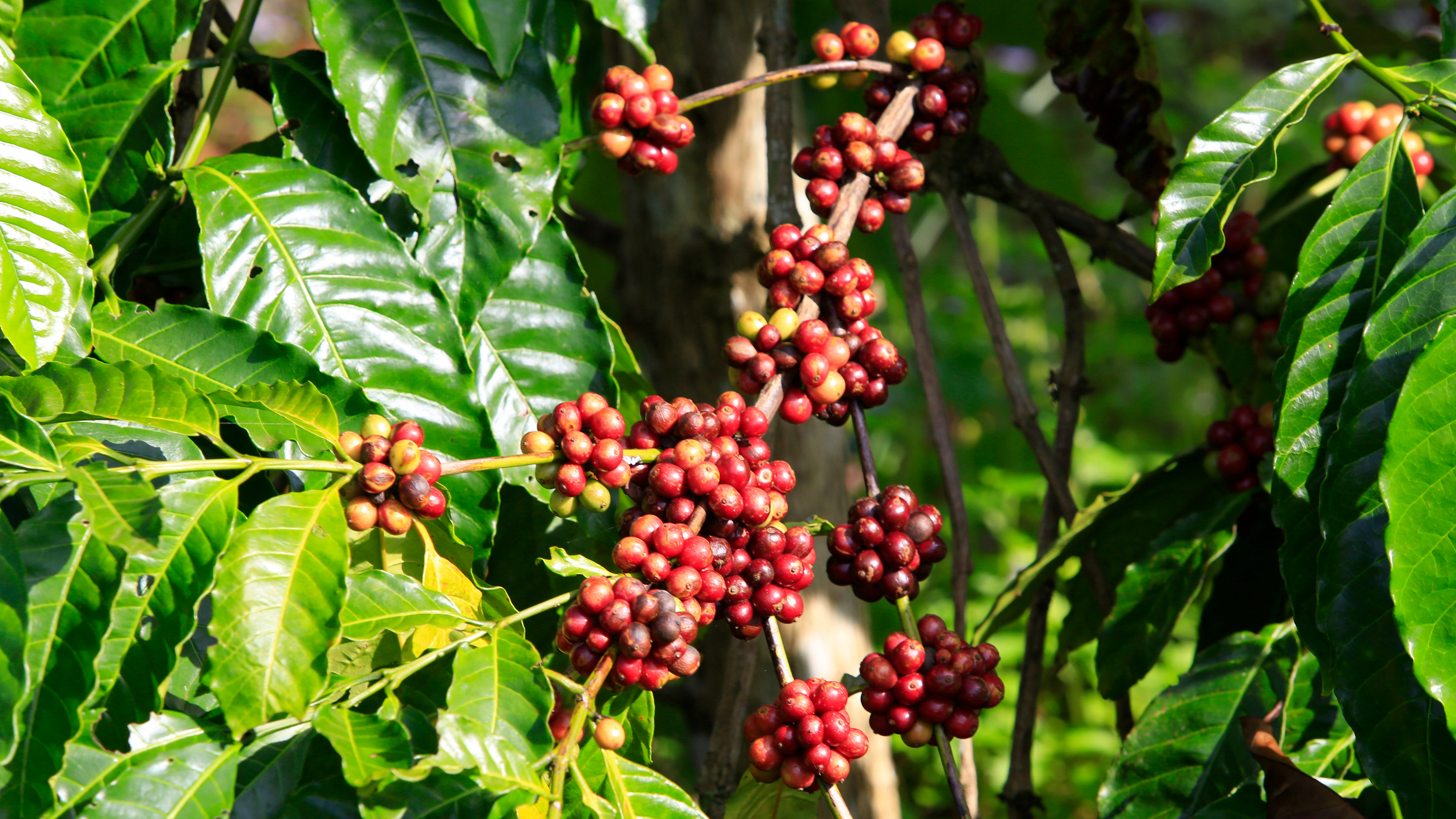
Brazilian arabica has a different risk profile. Frost has produced the largest historical price shocks, and El Niño has generally been associated with milder conditions across the growing belt. Treefera’s belt frost-stress index averages 0.019 in El Niño years, compared with 0.024 in neutral years and 0.033 in La Niña years.
The 2026 frost watch closed without an event. The belt minimum on 14 July was +2.69°C, compared with an average of −1.76°C in frost years. That does not constitute a complete price forecast—rainfall, crop condition, certified stocks and logistics still matter—but it isolates one measurable risk mechanism.
What does Vietnamese robusta add to that picture?
Gabrielle: Vietnamese robusta shows why the climate signal and the production outcome need to be analysed separately. Across 45 years of ERA5 data, the correlation between RONI and Central Highlands dry-season rainfall is −0.69. El Niño has historically been associated with materially drier conditions during the November–April dry season.
But the production effect is not automatic. Irrigation can absorb much of the rainfall deficit. During the strong 2015–16 El Niño, Vietnamese robusta yield declined by only 0.1%.
Local water reserves, reservoir levels and irrigation access are therefore essential to interpreting the signal. The same event can have limited direct relevance for one crop, reduce a key hazard for another and increase rainfall risk for a third.
How does regulation fit into the shift towards more granular evidence?
Jonathan: The people we spoke with showed greater confidence that implementation of the EU Deforestation Regulation would proceed without another delay. For companies exposed to regulated commodities, a firmer timetable supports more concrete planning.
The underlying requirement is consistent with the physical-risk discussion: companies need reliable location and traceability evidence rather than portfolio-level estimates alone. The same first-mile information used to establish origin and land-use history can also support analysis of water, weather and supply risk.
How can teams tell whether earlier physical-risk evidence is useful?
Jonathan: It needs to be tested against outcomes. Across 2020–24 forecast vintages, Treefera’s US corn yield model recorded a mean absolute error of 2.07 bushels per acre, compared with 3.33 for USDA WASDE. In 2022, it tracked the eventual NASS final yield of 173.4 bushels per acre five weeks before USDA’s May WASDE moved away from its 181-bushel trend baseline.
The objective is not to convert every early signal into a directional call. It is to identify meaningful divergence before it appears in aggregated reporting, test it against local conditions and give teams more time to assess whether action is warranted.
What should risk and supply-chain teams monitor next?
Gabrielle: Four things. First, distinguish unrelated weather events from ENSO effects: this summer’s heatwaves and droughts were separate from the developing El Niño. Second, match the ENSO signal to the crop calendar. Third, assess starting conditions such as soil moisture, water reserves, irrigation, stocks and logistics. Finally, update the assessment as the season develops.
Physical risk is not a static annual score. New observations can change both the probability and materiality of an outcome.
Jonathan: The developing El Niño will provide a significant test of that approach. Its main effects are still ahead.
For Treefera’s commodity-by-commodity assessment of the 2026–27 El Niño, get in touch with our team.
Insights
Recent News

COMMODITIES INSIGHTS
8 September 2026
From Ocean to Origin: How Treefera Turns a Pacific Signal Into Field-Level Risk
Every major forecasting centre now projects a very strong El Niño through the coming winter, and two further months of ocean observations have strengthened the outlook since Treefera's June briefing, …
THOUGHT LEADERSHIP
21 September 2026
Summer 2026: What the Heat Did at the First Mile - and Why Markets, Supply Chains and Lenders Will Feel It for Months
July 2026 tied July 2024 as the joint-warmest July on record, and USDA cut its US corn yield estimate twice between August and September. This piece traces what the heat did at the point of production…